

Current Exhibit
Current Exhibit
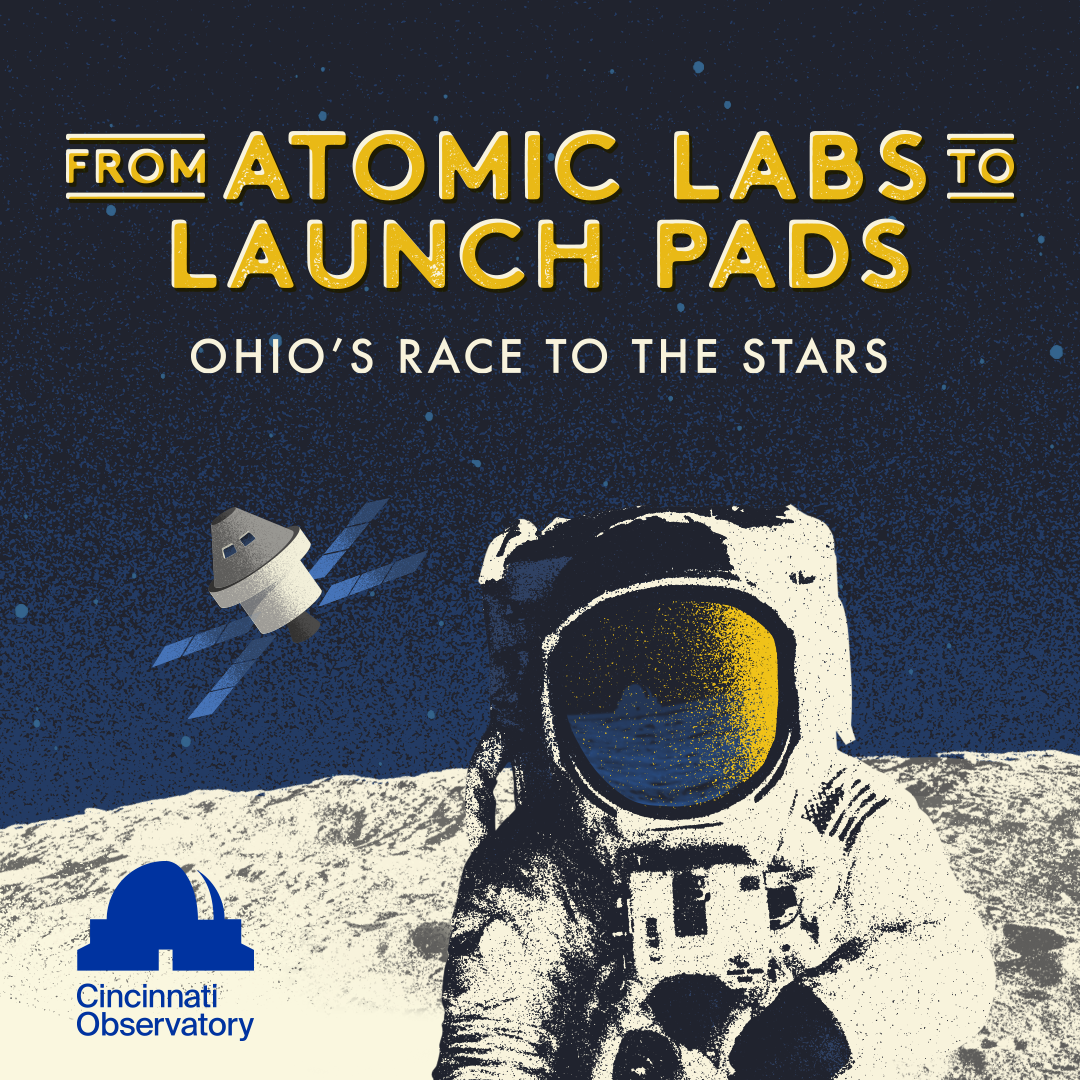
From Atomic Labs to Launch Pads: Ohio's Race to the Stars
Ohio gave the world many of its firsts in space—its astronauts, nuclear power, and groundbreaking work in celestial mechanics and computing, to name a few. As we look towards to returning to the Moon with the Artemis missions, and to next year’s celebration of 250 years of American independence—its important to remember Ohio’s formidable legacy in space exploration and how our innovative spirit continues to propel humankind to the furthest reaches of the universe.
.png)
The Brightest Stars: The Legacy of Cincinnati’s Women Astronomers
As the Birthplace of American Astronomy, the Cincinnati Observatory has been observing the stars for over 180 years. Yet, many of those stars, namely the women astronomers of the Observatory, have often been overlooked. Women like Louisa Trask Mitchel, who was likely the first American person to observe Neptune, to Antoinette Kettenacker, an accomplished mathematician who was published on her work with the computation of orbits. Numerous women have contributed to astronomy in Cincinnati in stellar ways. This trend continues with the Observatory’s current staff which includes its first female Executive Director and a majority female staff.
Discover the legacy of women that have worked at the Observatory, in STEM fields locally and globally, and what the future of women in science looks like in an all new exhibit at the Cincinnati Observatory. The Brightest Stars: The Legacy of Cincinnati’s Women Astronomers is aimed at inspiring all to look to the stars in the past to shape those that will change the future. Cincinnati women have proved, and continue to prove, that science is, and always has been, for everyone.
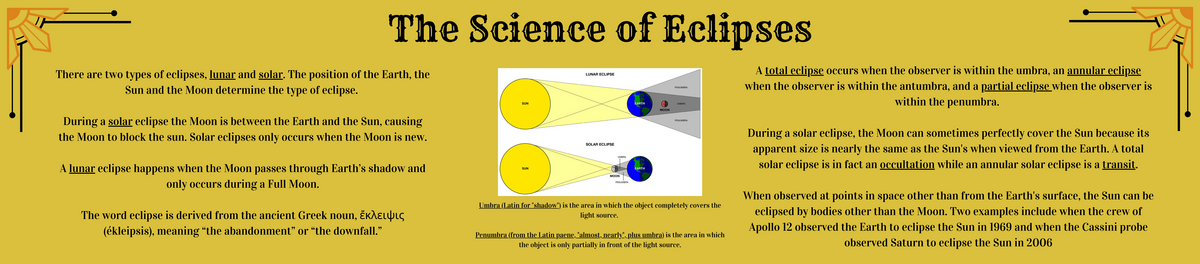
Eclipses: Past, Present, Future
This exhibit covered two past total solar eclipse expeditions by Observatory directors and staff (1869 and 1932), 19th and early 20th century astrophotography, and the science behind eclipses. By looking back at the past, we can understand the challenges and efforts it took to document eclipses compared to the technology we have today. We can also understand the evolution of astronomy, technology since the 19th century and the scientific importance of “chasing eclipses.”
.png)